Three quotes, one obvious winner (and one expensive mistake)
When I pulled the three quotes for our 2022 athletic sandals sourcing program, the decision looked easy.
$18.40 a pair. The next supplier was at $21.10.
We placed the order.
Eleven weeks later I was standing in a warehouse in Dongguan watching a QC team count pairs that nobody would accept. The quote was the cheapest thing about that order.
I've spent nine years handling footwear and accessories sourcing for a mid-size sporting goods distributor. In that time I've documented seven significant procurement mistakes — the kind that get written up, not swept under a rug. Total damage across those seven: roughly $31,000. Not catastrophic. Also not nothing.
Here's what I actually learned: the number on the quote is the smallest part of what you end up paying.
The problem isn't the price. It's the sentence the price finishes.
For most of my first four years, every sourcing review started the same way. Pull the quotes. Normalize to landed cost. Lowest wins.
That was the whole framework. Two columns, one formula.
The problem with that framework is it assumes the quote is a complete description of what you'll pay. It isn't. It's a partial sentence, and the rest of it gets completed on a later invoice, a change order, a rework batch, or a market you didn't plan to serve.
Everything I'd read about supplier vetting said to collect three quotes and compare. In practice, the number of quotes never predicted the outcome. What predicted the outcome was what each quote left out.
From the outside, a lower unit price looks like a leaner, more efficient supplier. The reality is usually that some cost has been deferred — to the mold invoice, the freight correction, the relabel batch, or the rework you didn't budget for.
Let me show you where the rest of that sentence lives.
Five places the money actually goes
1. Tooling is not in the unit price (even when you think it is)
The $18.40 sandal quote didn't mention the mold. When I asked, the supplier said the mold was "included." What that meant was: included in the first production run, amortized across the order. If we reordered, we'd pay it again.
We reordered. The second mold revision — necessary because the strap anchor point didn't work for the US size run — added $900. The first mold had already been amortized into a run we eventually discounted because of a color mismatch.
Two molds. Two cost lines. Neither of them in the "unit price."
2. Size curves are a purchasing decision, not a production one
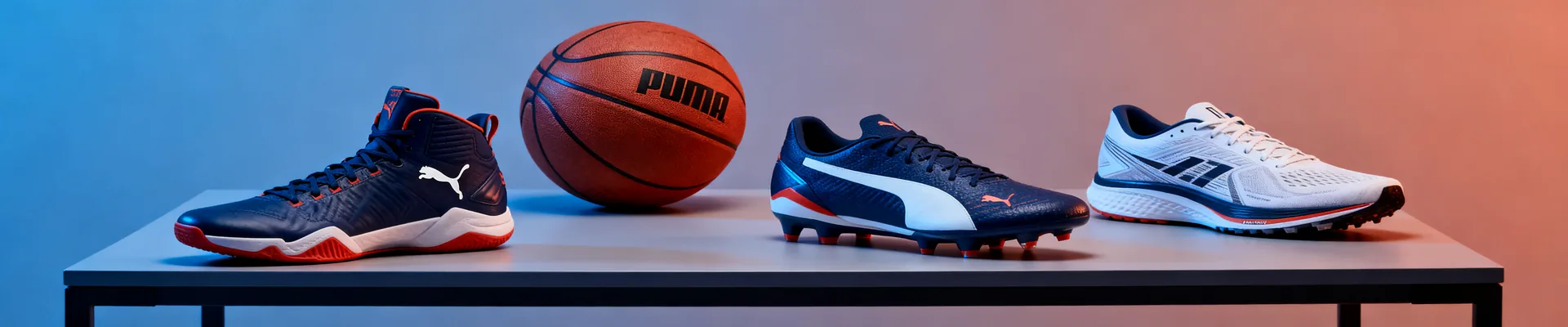
In 2022 we ran the Puma Hali 1 boys' basketball shoes through a new factory. The order was 1,200 pairs. The unit price was competitive. The size curve we submitted was the same curve we used for men's — because that's what we had on file.
I knew I should get the size curve signed off in writing before production started. I thought, what are the odds the factory runs this differently? The odds caught up with us. Boys' sizing doesn't distribute the same way as men's. We ended up with 180 pairs in sizes nobody ordered and zero in the middle of the curve that every team dealer wanted.
The units were fine. The assortment was wrong. By the time we re-cut the size run, we'd missed the back-to-school window.
3. Compliance doesn't show up until it does
Our first private label shoe care kit looked clean on paper. We ordered the brush, the cleaner, the cloth, and the box. The supplier quoted a per-unit price that undercut everyone.
What the quote didn't include was a labeling review. When the shipment hit our EU account, the ingredients panel was missing two required translations. The kit wasn't sellable as packaged. We had to relabel 2,400 units at a third-party facility (which, honestly, we should have factored in from the start).
Compliance isn't a checkbox you clear once. It's a running cost that reappears every time you change a market, a label, or a packaging component.
4. Freight is where the quote stops being comparable
Our hiking shoe program was the one that finally broke my spreadsheet. The quote was FOB. We compared it against a CIF quote without adjusting for risk transfer, port fees, or the fact that one supplier loaded freight a week later than promised.
Under Incoterms 2020, FOB means the supplier's responsibility ends when the goods are on the vessel. Everything after — demurrage, re-routing, port delays — is yours.
We learned that in the most expensive way: a five-day port hold on 800 pairs of hiking shoes that cost us a seasonal placement. We'd compared two numbers that weren't the same number. That wasn't the supplier's fault. It was ours.
5. The brand you're buying isn't the brand you're selling
This one took me the longest to internalize.
When we source Puma basketball shoes for our team dealers, we're not just buying a product. We're buying access to an authorized channel, which comes with spec expectations, minimum presentation standards, and a return process that doesn't work like an unbranded order.
The same logic applies in reverse to private label. A cheaper unbranded basketball shoe at the same unit price isn't the same product. It's a different liability profile, a different warranty exposure, and a different customer conversation.
What those mistakes actually cost
Let me put numbers on it, because vague lessons don't change behavior.
- The sandal mold double-charge: $900 in tooling plus a $1,600 discount to move the wrong-color run.
- The Hali 1 size curve: 180 dead pairs plus a missed back-to-school window that our team dealers remembered for two seasons.
- The shoe care relabel: $3,100 in third-party relabeling plus a six-week launch delay.
- The hiking shoe port hold: $1,400 in fees and a lost placement worth roughly $6,000 in reorder revenue we never got.
The unit-price savings across all four orders was under $3,000. The total cost of chasing those savings was more than $13,000.
That's the part I keep coming back to. We saved money and lost money in the same quarter and called it a win because the spreadsheet said so.
The six-question checklist that replaced the spreadsheet
I'm not going to pretend this is complicated. It isn't. It's just a different set of questions.
Before I compare any two quotes now, I run the same six checks. It's the closest thing I have to a hiking shoes wholesale cost guide that actually reflects reality:
- What is excluded from this quote? Tooling, testing, labeling, packaging, and freight should be named, not assumed. If the supplier won't itemize them, that's information.
- What is the risk transfer point? FOB, CIF, DDP — name the Incoterm and price it out. A landed-cost comparison is only valid if both quotes share the same term.
- What is the minimum order, and what is the reorder minimum? First-run pricing often hides a higher reorder threshold. Ask both.
- Who owns the size curve, the color spec, and the label? If the answer is "we'll figure it out," it's your cost, not theirs.
- What does the last 10% of the order look like? Rework, returns, and short-ships almost always land in the tail. Ask how the supplier handles it before you order, not after.
- What is the brand or channel requirement? Authorized goods and private label goods have different compliance, warranty, and resale constraints. Price them separately.
That's it. Six questions. The quotes still look similar on paper. The orders don't.
The one thing I'd tell a new buyer
The lowest unit price is not a lie. It's an incomplete sentence.
If you're handling athletic sandals sourcing, shoe care private label, hiking shoes for wholesale, or branded basketball shoes for a team channel — the number you should be comparing isn't the one on the quote. It's the one you'll be explaining to your finance lead six months from now.
Total cost of ownership (i.e., the full landed cost plus the cost of getting it wrong) is a boring phrase. It's also the only one that kept me out of trouble after 2022.
I learned this the expensive way. You don't have to.

I’m Jane Smith, a senior content writer with over 15 years of experience in the packaging and printing industry. I specialize in writing about the latest trends, technologies, and best practices in packaging design, sustainability, and printing techniques. My goal is to help businesses understand complex printing processes and design solutions that enhance both product packaging and brand visibility.
Leave a technical comment
Do not include credentials, personal data or confidential factory information.