Last first
Colorway meetings happen after last family, drop map and foam class are frozen.
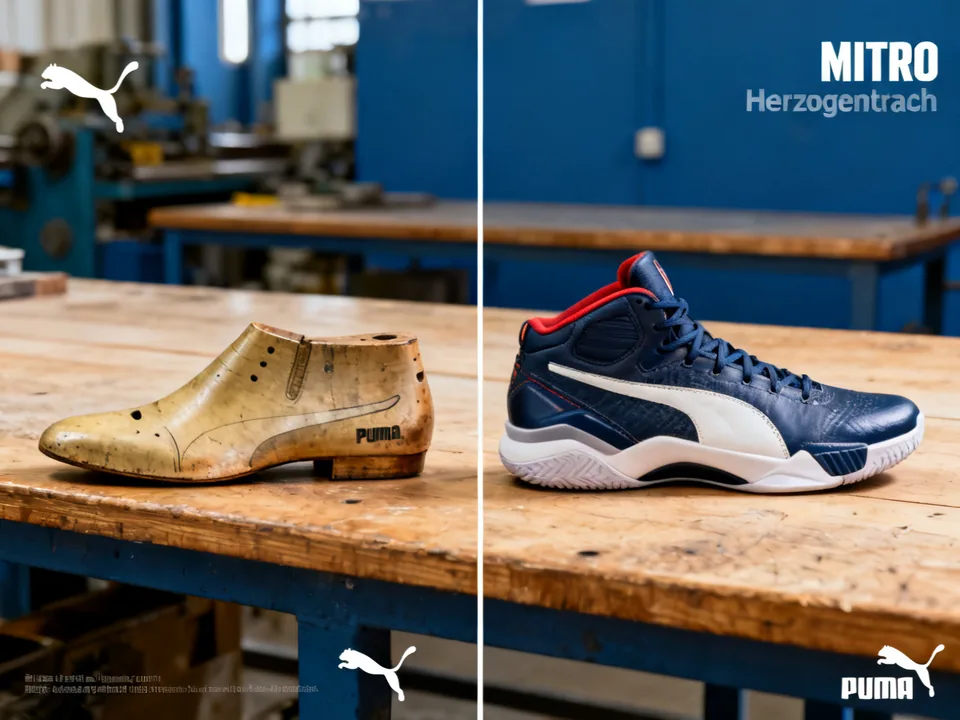
Puma still plans athletic footwear around last families that started in a 1948 Herzogenaurach workshop and now grade into basketball court shoes, soccer plates, road running stacks and kids blocks. The story on this page is for buyers who need to know why those last families still sit in wholesale and OEM line books.
When Rudolf Dassler registered Puma in 1948, the workshop already treated last volume, toe spring and heel height as production constraints. That geometry is not a marketing badge. It is a last library: court containment, stud-plate pitch and running drop still constrain how an All-Pro Nitro basketball shoe, a Future FG cleat and a Deviate Nitro road shoe are graded. Buyers who ask for a slimmer fashion last without a court sidewall are asking for a different tool, not a colorway change.
Herzogenaurach remains the construction archive. Line reviews still start with last family, drop map and foam class before anyone talks about seasonal color. Basketball constructions keep lateral walls and court rubber. Soccer constructions keep FG, AG or turf plates on separate tools. Running constructions keep a stated drop, usually in the 6–10 mm class on road SKUs. Kids constructions keep CPSIA tracking and a scaled collar so a youth pair is not a cut-down adult last.
OEM partners inherit that discipline. A private-label colorway can change mesh GSM, tongue marks and hangtag copy. It cannot silently drop the court sidewall or rewrite a NITRO claim onto an EVA midsole. That is the difference between a Puma program and a generic athletic shoe sourced from an open last book.
The last is a factory constraint, not a logo. If the volume changes, the tool changes, and the gold sample starts over.
Colorway meetings happen after last family, drop map and foam class are frozen.
NITRO, EVA and Phylon stay on separate hangtags. Foam class is not upgraded in copy.
Stock quotes, OEM proposals and dossier packs use published windows so buyers can plan catalogs.
Youth lasts are graded, not shrunk. CPSIA tracking rides with every kids carton that leaves the line.
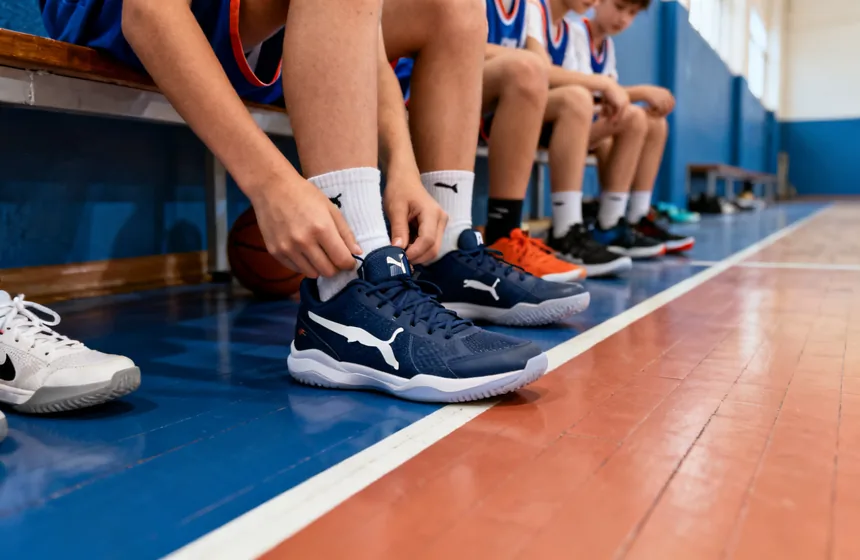
Puma treats durability as a club cost, not a slogan. Basketball shoes that keep a SATRA flex gate and a bonded sidewall reduce replacement volume for school and municipal programs. Soccer plates that keep the named surface (FG, AG or turf) stay in club bags instead of becoming a one-season SKU. That is why recycled upper content is tracked on a materials ledger and never used to excuse a weaker outsole compound.
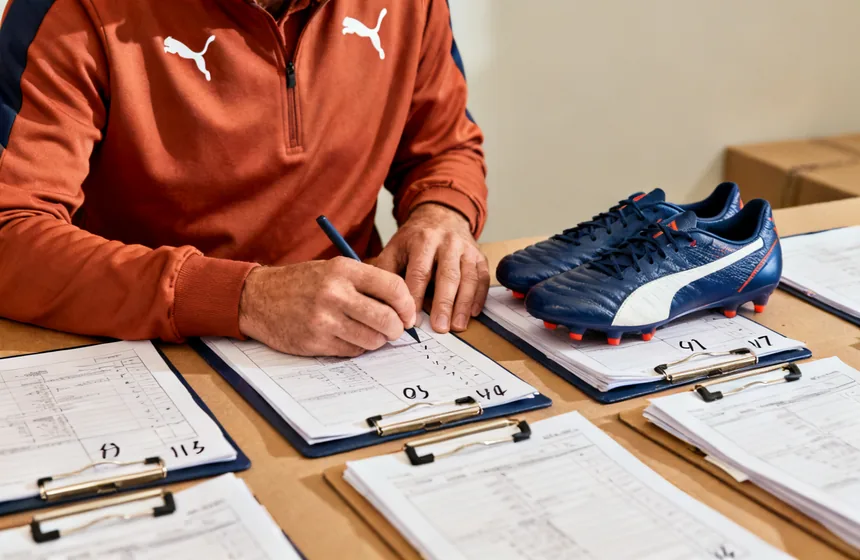
School, club and campus orders need a size-run mix, not a single pair photo. Puma youth basketball and soccer pairs carry CPSIA tracking for North America and EN 71 notes when a destination market treats the SKU as a toy-adjacent product. Team colorways freeze numbering windows and heel marks before cutting. The buying desk will not accept a roster after the gold sample if the size mix changes the last run.
Share whether you are stocking basketball shoes, soccer cleats, running shoes or a private-label colorway. Include destination market so kids CPSIA and work ASTM files can be attached when they belong on the order.